

최신AVIXA Certified Technology Specialist - CTS무료샘플문제
문제1
A full range reinforcement system will TYPICALLY have a frequency response of:
A full range reinforcement system will TYPICALLY have a frequency response of:
정답: B
설명: (ITDumpsKR 회원만 볼 수 있음)
문제2
When selling rental or staging services, which is the MOST effective way to showcase a company's services and expertise?
When selling rental or staging services, which is the MOST effective way to showcase a company's services and expertise?
정답: C
설명: (ITDumpsKR 회원만 볼 수 있음)
문제3
Which of the following protocol allows sources and displays to communicate in order to ensure the display is sent the correct signal?
Which of the following protocol allows sources and displays to communicate in order to ensure the display is sent the correct signal?
정답: B
설명: (ITDumpsKR 회원만 볼 수 있음)
문제4
Which requirement supersedes others when planning an AV project for a client?
Which requirement supersedes others when planning an AV project for a client?
정답: A
설명: (ITDumpsKR 회원만 볼 수 있음)
문제5
When doing a site survey for the installation of a large LED video wall, what is MOST important to consider?
When doing a site survey for the installation of a large LED video wall, what is MOST important to consider?
정답: A
설명: (ITDumpsKR 회원만 볼 수 있음)
문제6
Which viewing category describes the usage of a display as reference for CAD drawings?
Which viewing category describes the usage of a display as reference for CAD drawings?
정답: B
설명: (ITDumpsKR 회원만 볼 수 있음)
문제7
Image:
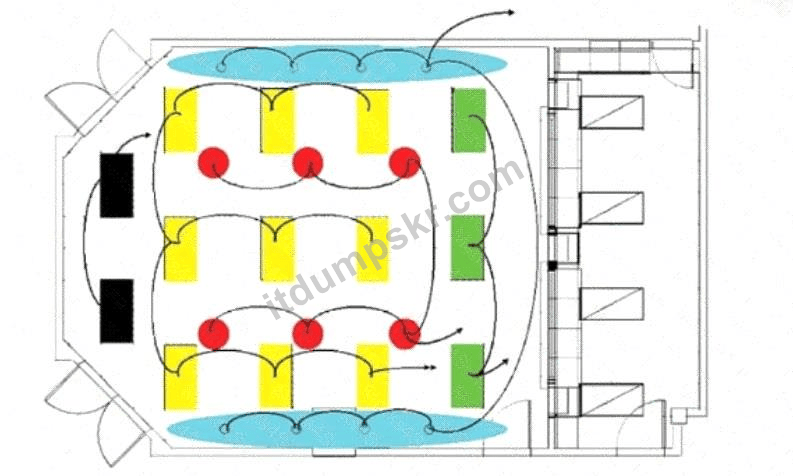
Based on this diagram, how many lighting zones are there?
Image:
Based on this diagram, how many lighting zones are there?
정답: C
설명: (ITDumpsKR 회원만 볼 수 있음)
문제8
When compared to Listener 4, which listener simultaneously hears the speaker at +6db? Select the answer by clicking on the correct listener.
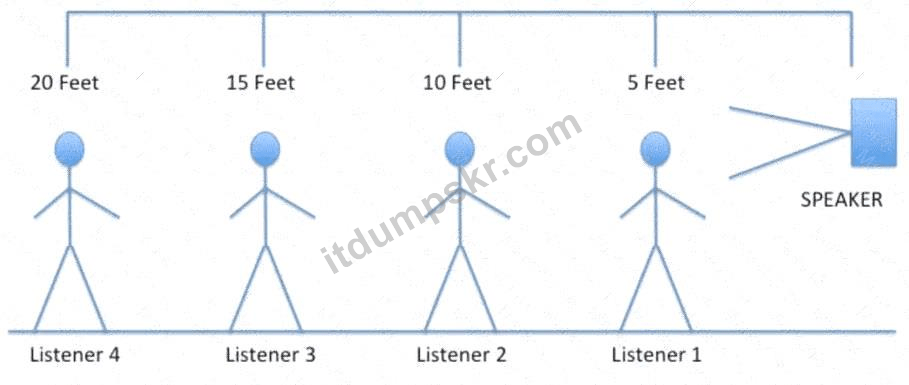
When compared to Listener 4, which listener simultaneously hears the speaker at +6db? Select the answer by clicking on the correct listener.
정답:
Explanation:
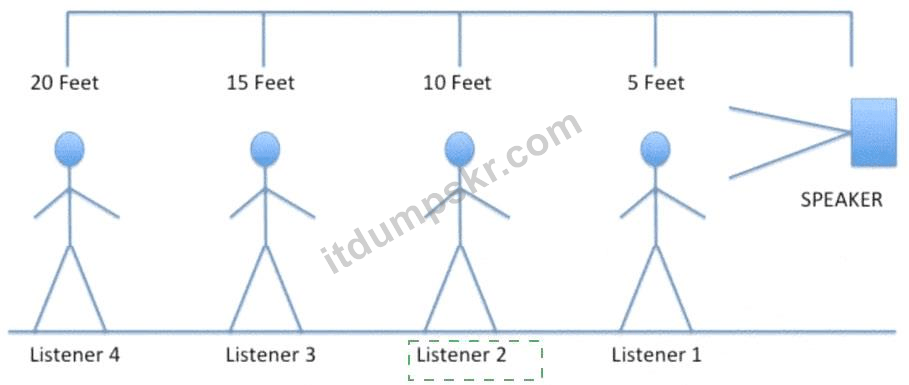
Listener 2
In sound propagation, every doubling of distance from a sound source generally results in a decrease of approximately 6 dB in sound level due to the inverse square law. Conversely, when moving closer to the sound source, the sound level increases by approximately 6 dB each time the distance is halved.
Given Listener 4 is at 20 feet from the speaker:
* Listener 3 is at 15 feet, which is closer but not a direct halving of Listener 4's distance, so the change is less than 6 dB.
* Listener 2 is at 10 feet, which is half the distance of Listener 4 (20 feet). This halving of distance results in a sound level increase of approximately 6 dB.
* Listener 1 is at 5 feet, which is closer than Listener 2 and results in a higher increase in dB compared to Listener 4.
CTS Technology Specialist Reference
Understanding sound level changes over distance is essential in AV system design to ensure balanced audio coverage. The CTS materials cover the inverse square law extensively, explaining how sound pressure levels change as the distance from the sound source varies. Listener 2, at half the distance from Listener 4, receives sound at +6 dB compared to Listener 4, aligning with this principle.
문제9
Which is the MOST important factor during the development of an AV project scope?
Which is the MOST important factor during the development of an AV project scope?
정답: D
설명: (ITDumpsKR 회원만 볼 수 있음)
문제10
For ceiling speakers with a 90° effective coverage angle, a ceiling height of 3 m (10 ft), and an ear height of
1.2 m (4 ft), the spacing for a 50% coverage or edge-to-center layout is:
For ceiling speakers with a 90° effective coverage angle, a ceiling height of 3 m (10 ft), and an ear height of
1.2 m (4 ft), the spacing for a 50% coverage or edge-to-center layout is:
정답: B
설명: (ITDumpsKR 회원만 볼 수 있음)
문제11
When training a new user to operate the solution that has been provided, how should the training be started?
When training a new user to operate the solution that has been provided, how should the training be started?
정답: B
설명: (ITDumpsKR 회원만 볼 수 있음)
문제12
The limits of the vertical visual field indicate that displays should be positioned where in relation to the viewers' standard line of sight?
The limits of the vertical visual field indicate that displays should be positioned where in relation to the viewers' standard line of sight?
정답: D
설명: (ITDumpsKR 회원만 볼 수 있음)
문제13
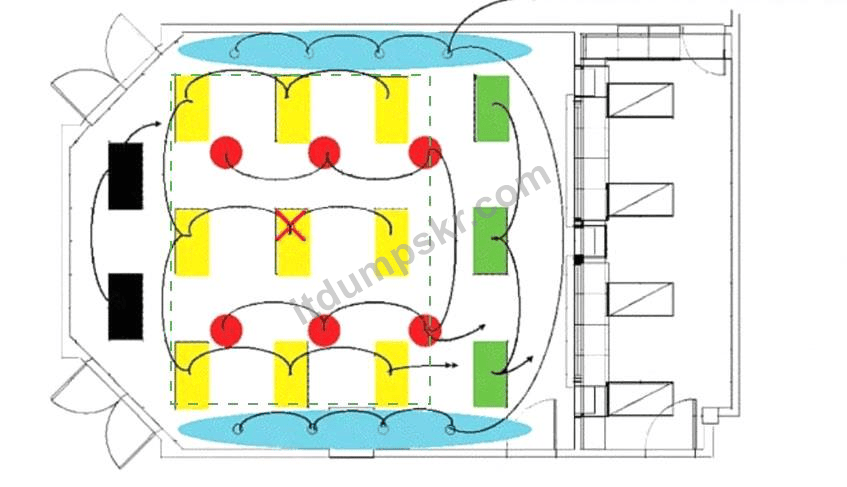
The video conferencing suite shown has a large conference table centered in the room. Dimming which of the COLORED zones would tend to decrease facial shadows? Select the answer by clicking on any light fixture within a zone.
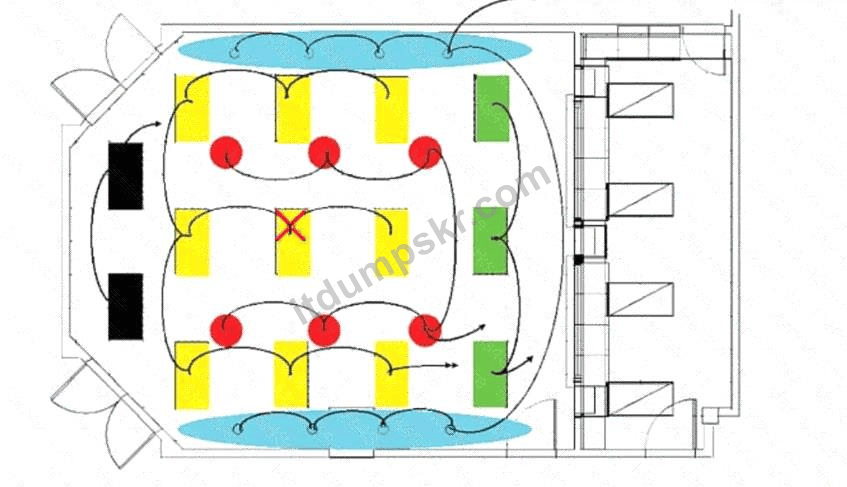
The video conferencing suite shown has a large conference table centered in the room. Dimming which of the COLORED zones would tend to decrease facial shadows? Select the answer by clicking on any light fixture within a zone.
정답:
Explanation:
Yellow-colored zones (any light fixture within the yellow zones directly above the seating area).
In video conferencing, balanced and well-placed lighting is crucial for achieving good facial visibility and reducing harsh shadows. Overhead lights can cast shadows on participants' faces, particularly under the eyes and nose, which can detract from a professional appearance on camera. By dimming lights directly above (in this case, the yellow zones), you reduce the intensity of the light falling straight down onto faces, softening shadows and creating more even lighting.
Dimming lights in the green or blue zones would be less effective, as they are positioned at the perimeter of the room and provide indirect lighting that does not directly influence facial shadows over the conference table.
CTS References: AVIXA CTS Exam Guide, Chapter on Lighting Considerations for Video Conferencing; CTS Handbook, Section on Proper Illumination Techniques for AV Environments.
문제14
During a routine service visit, an engineer notices an LED indicator on a projector's front panel blinking regularly. What should be done?
During a routine service visit, an engineer notices an LED indicator on a projector's front panel blinking regularly. What should be done?
정답: A
설명: (ITDumpsKR 회원만 볼 수 있음)